Fish Nutrition
From feeding tips to choosing the right food, here's everything you need to know about fish nutrition and how to choose the right fish diet for your pet.
The food you provide for your fish plays a crucial role in their health, happiness, and overall well-being. Proper feeding practices ensure that your fish receive the necessary nutrients to thrive. With the right care, fish make great pets.
Fish Nutritional Requirements
There are thought to be over 33,000 different species of fish in the world, and around 2,500 in the ornamental fish trade. Feeding strategies and nutritional needs vary between this myriad of fish families and species. Whilst this may sound daunting, it is easy to provide good nutrition by following some basic principles.
Freshwater and marine ornamental fish can differ in their nutritional requirements. Some fish have evolved to feed on specific types of foods, and they can be herbivores, carnivores, or omnivores.
Fish in their wild habitats obtain their nutrients through a variety of both plant and animal sources and the majority of aquarium fish are omnivores. However, when choosing any food, it’s important to check this.
Fish also have specific physical feeding needs, and we refer to this as feeding strategies. They can be bottom, middle, or surface feeders or algae grazers and this also needs to be considered.
Unless there is only one species of fish in the tank, it is very likely that different foods will be needed. Owners will need to consider this when choosing their fish and ask for guidance from the retailer.
Fish Diet
A good quality prepared food will provide fish with a complete and balanced diet including all the nutrients they need. This will include protein (which supplies the 10 essential amino acids that most fish require), fats (for energy and as a source of essential unsaturated fatty acids), vitamins and minerals.
Most species of fish are unable to make their own Vitamin C and so they must be provided with this nutrient in the diet. Essential Vitamins including A, C, D, E, K and B group, are all supplied in complete fish foods.
Some fish foods contain pigment enhancers, to bring out the natural colours of the fish (eg. in the form of ingredients such as shrimp meal, spirulina and the carotenoid astaxanthin).
Fish Feeding Tips
- Generally, fish should be fed two to three times daily. Fish will learn the routine and assume it’s feeding time if you are close to the tank!
- Err on the side of caution. Overfeeding is much more common than underfeeding.
- Overfeeding results in incomplete digestion of food, which can lead to increased waste excreted by the fish. This combined with uneaten food can then pollute the water.
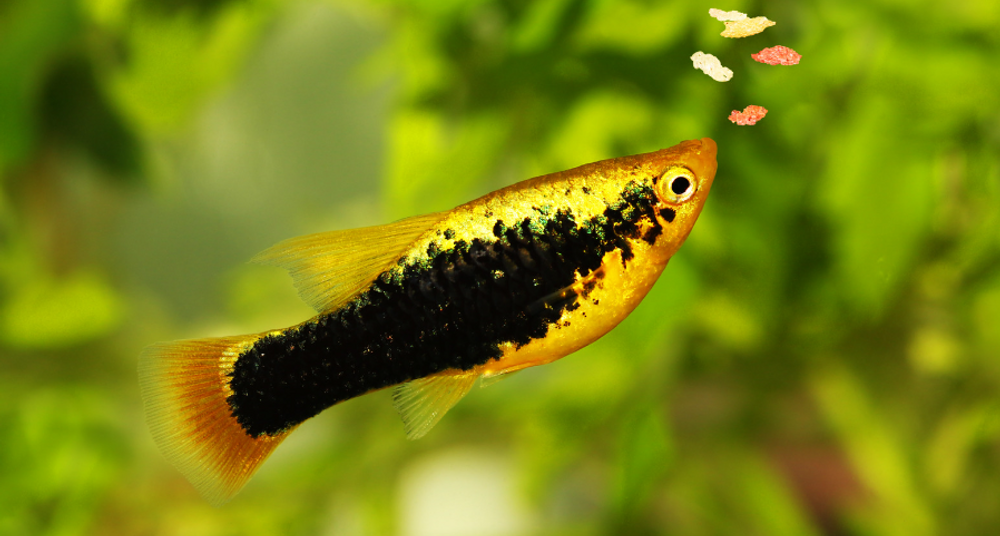
- A few flakes, granules or pellets per fish is sufficient. The fish should eat all the food in two minutes or less.
- Always ask about the specific feeding needs of a fish before purchasing it, as some may have special requirements and you need to consider all the fish in the tank.
Food Quality and Water Quality
Fish food quality has a significant impact on the aquarium or pond environment, and how easy it is to maintain. This is because it is the main source of the dissolved and solid waste produced by the fish. Overfeeding, or feeding a poor-quality food, will result in greater waste production, and faster pollution of the water. This in turn necessitates more maintenance to keep the environment healthy.
Good quality foods use the right ingredients, manufacturing processes, and formulas to keep waste production to a minimum, whilst at the same time providing the fish with a healthy diet.
Holiday Care for Your Fish
If you go away on holiday, ask a responsible person to check on the fish and equipment each day. Remember:
-
Tropical fish will need checking daily .
-
Leave instructions on how to feed and avoid overfeeding.
-
Prepare some meals in advance, which are of the correct ration size.
-
An automatic feeder will release a measured amount of food each day. This still needs to be checked every day to ensure it’s working correctly.
Remember it's actually better to underfeed rather than overfeed because fish are more susceptible to poor water quality than a lack of food.